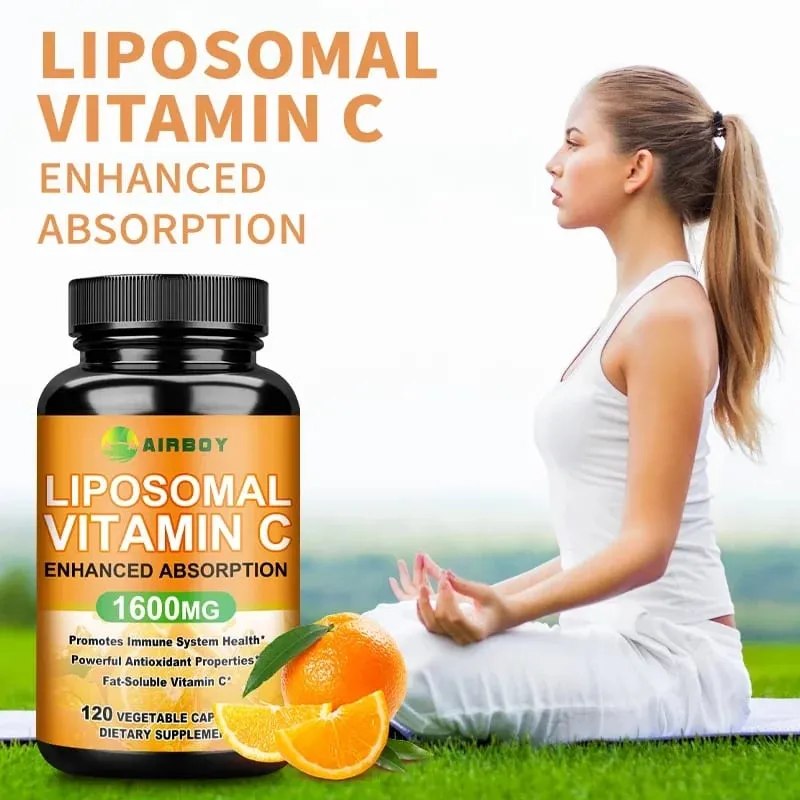
Liposomal Vitamin C 1600mg: The One Supplement I Actually Keep on My Own Shelf
I'll be straight with you — I take a lot of products home to test before they ever make it to the store page. Most of them are fine. A few are forgettable. Every now and then something earns a permanent spot on my kitchen counter, and this liposomal vitamin C is one of those. It's SKU P3256807691621852 if you want to look it up in our system, and it's priced at $18.11, which for 1600mg of liposomal vitamin C is honestly kind of a steal. Let me tell you why.
First, the materials, because this matters more than people think. The vitamin C inside isn't just loose ascorbic acid powder stuffed into a capsule. It's wrapped in liposomes — tiny fat-based bubbles made from phospholipids, the same kind of material your cell membranes are built from. That's the whole point of the "liposomal" label, and it's not marketing fluff. The capsule shell itself is standard gelatin or cellulose depending on the batch, smooth and easy to swallow, and the fill is a dense, fat-soluble blend rather than the gritty powder you get in cheap tablets. You can tell the difference the second you shake one — no rattle, no loose powder sound. It's a solid, well-made capsule, and the ingredient list is refreshingly short. Vitamin C. That's the active. No weird fillers or dyes doing anything except taking up space.
Now the specs, since I know some of you want the numbers before anything else. Each capsule delivers 1600mg of liposomal vitamin C, and the standard dose is two capsules once daily. You get standard bottle sizes — the typical 60 and 120 count options — so if you're trying it for the first time, the smaller bottle is the smart move. As for colors, the capsules themselves come in the usual off-white to pale cream shades you'd expect from a phospholipid-bound formula, and the bottles are the standard opaque amber or white HDPE with a child-resistant cap. No color options to choose from here, which I actually appreciate. Supplements shouldn't look like candy. The shelf life is a full two years from the manufacturing date, and we ship within 48 hours on weekdays, so you're not waiting around.
So what do you actually use it for? Three real scenarios come to mind. Scenario one: you're the person who catches every cold that goes around the office, and you want something stronger than the 500mg chewables from the drugstore. Two capsules in the morning with breakfast, done. Scenario two: you're training hard, lifting or running, and you care about collagen production and recovery because your joints and skin are taking a beating. Vitamin C is a cofactor your body literally needs to build collagen — you can't make it without enough C on board. Scenario three: you're traveling, sleeping badly, or going through a stressful stretch, and your immune system feels like it's running on fumes. That's when a higher-dose, well-absorbed form earns its keep. It's also a legit antioxidant, which is one of those words that gets thrown around loosely, but here it's accurate — vitamin C neutralizes free radicals, and the liposomal delivery means more of it actually reaches your cells instead of getting flushed out.
Using it is about as simple as it gets. Take two capsules once daily with food — food matters here because the liposomes are fat-based and a little dietary fat helps absorption. Don't overthink it. Don't double up thinking more is better. One dose, once a day. As for maintenance, keep the bottle somewhere cool and dry, away from the stove and away from sunlight. You don't need to refrigerate it, and you shouldn't leave it in a hot car. If you transfer capsules to a pill organizer, use them within a couple of weeks so they don't get sticky or degrade. That's it. No ritual, no complicated schedule.
Now the honest part, because I'd rather lose a sale than have you buy something that doesn't fit. Pros: the 1600mg dose is genuinely high, the liposomal form absorbs noticeably better than plain ascorbic acid for most people, the capsules are easy to swallow, the price is fair, and the ingredient list is clean. Cons, and I'll be blunt: two capsules a day means a 60-count bottle only lasts you a month, so it's not the cheapest habit if you're used to bargain-bin vitamin C. Some people — not everyone, but some — get mild digestive discomfort if they take it on an empty stomach, so eat first. And I can't prove it works for you the way a lab test could, because absorption varies person to person. That's just the truth about supplements.
Here's the expert-style analysis you might want if you're deciding between this and a plain $7 bottle of vitamin C. Standard ascorbic acid is water-soluble, and your body has a ceiling on how much it can absorb at once through the gut — past a certain point, the rest goes down the drain, literally. That's why mega-doses of regular C often don't do much beyond making expensive urine. Liposomal encapsulation sidesteps that bottleneck. The fat-soluble bubbles get absorbed through the lymphatic system and intestinal wall more efficiently, delivering more of the vitamin into the bloodstream intact. It's a delivery-system upgrade, not a different vitamin. This design suits people who want a higher effective dose without taking handfuls of tablets, people who've found regular C irritating to their stomach, anyone focused on collagen and skin health, and anyone who wants immune support that's actually absorbable. If you're perfectly happy with a basic ascorbic acid tablet and it works for you, keep your money. This is for the person who wants more bang per capsule.
At $18.11 with 48-hour weekday shipping and a two-year shelf life, it's an easy one to try. Grab the small bottle first, see how you feel after a month, then decide. I'll be restocking it either way.